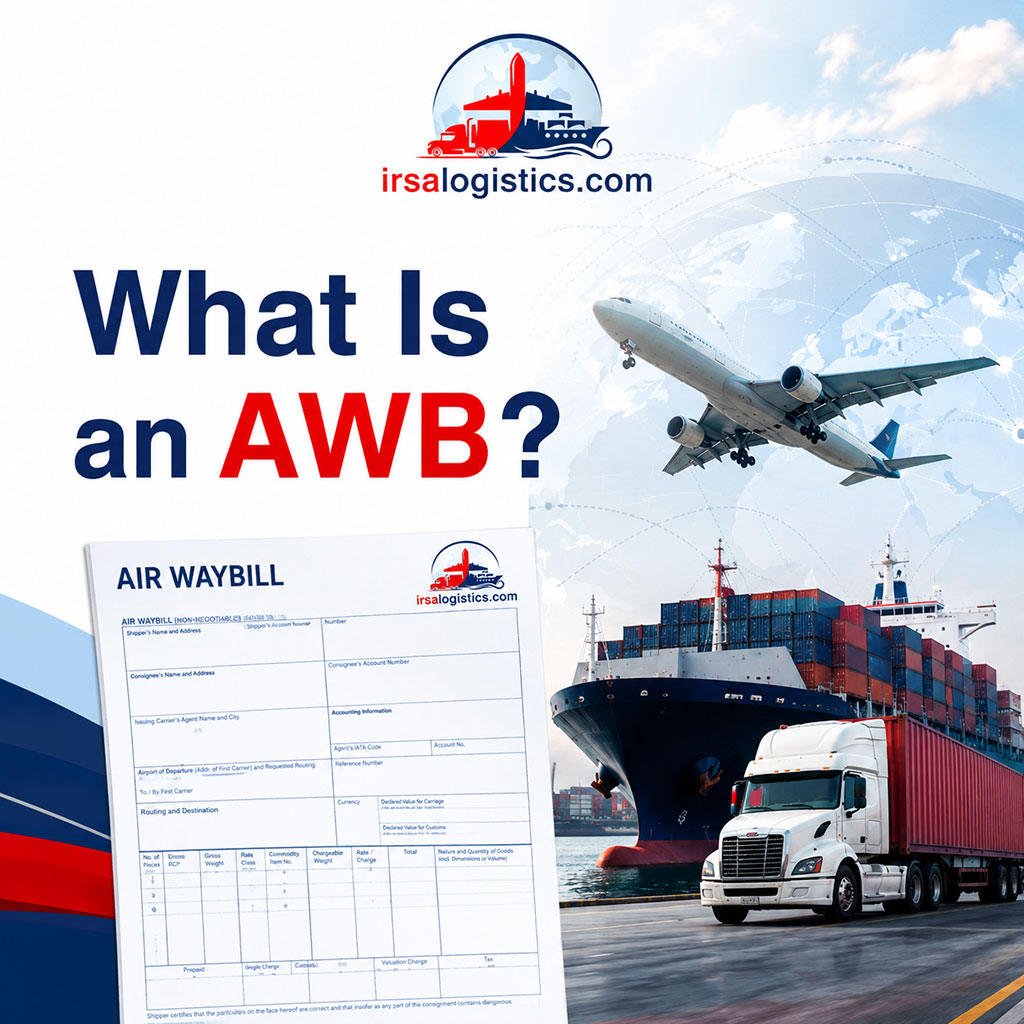
What Is an AWB and What Is Its Use in Air Freight?
What Is an AWB and What Is Its Use in Air Freight?
In air freight, documents play an important role in the proper movement and delivery of goods. One of the most important documents used in this process is the AWB, or Air Waybill. But exactly what is an AWB, and why do freight forwarders, exporters, and importers need it?
AWB stands for Air Waybill. It is a document that records information about a shipment transported by air. It is not simply a receipt for the delivery of goods. It also contains important details about the shipper, consignee, route, type of goods, weight, number of packages, and shipping conditions.
If you are involved in international air freight, understanding the AWB can make the process of tracking shipments, checking documents, and handling customs procedures much easier.
What Is an AWB?
What is an AWB? An AWB, or Air Waybill, is a transport document issued by an airline or freight forwarder to confirm that a shipment has been accepted for air transportation.
The document usually includes information such as the shipper’s and consignee’s names and addresses, origin and destination airports, shipment weight, number of packages, description of goods, and freight charges.
For example, imagine that an Iranian company wants to ship several industrial parts from China to Tehran. After the goods are handed over to the freight company, the shipment details are recorded in the Air Waybill and a unique number is assigned to it. This number can then be used to track the shipment.
Simply put, an AWB acts as an identification document for an air shipment. However, from a legal and practical perspective, it has important differences from bills of lading used in sea or land transportation.
What Information Does an Air Waybill Contain?
The exact contents of an AWB may vary depending on the airline and type of shipment, but it usually contains the following information:
- Shipper’s name and details
- Consignee’s name and details
- Airline or freight company’s information
- Airport of origin
- Airport of destination
- AWB number
- Description of goods
- Number of packages
- Gross weight
- Chargeable weight
- Dimensions, when required
- Freight charges
- Shipping instructions and conditions
- Information about special cargo, when applicable
- Date of issue
Depending on the shipment, additional information may also be included. For this reason, it is a good idea to compare the AWB with the commercial invoice, packing list, and other shipping documents before confirming the shipment.
What Is an AWB Number and Why Is It Important?
One of the most important details on an Air Waybill is the AWB number. This number acts as a unique identifier for the shipment and is used to track its status.
As a shipment moves through different stages, its information is recorded in the airline’s or freight forwarder’s system. By entering the AWB number into the relevant tracking system, you may be able to see information such as shipment acceptance, flight details, arrival at the destination, or delivery status.
The exact tracking information depends on the airline or freight company, and not every carrier provides the same level of detail.
What Is the Difference Between MAWB and HAWB?
If you work with international air freight, you have probably come across the terms MAWB and HAWB in addition to AWB.
MAWB stands for Master Air Waybill. It is generally issued by the airline for the main shipment and represents the transportation relationship between the airline and the freight forwarder.
HAWB, on the other hand, stands for House Air Waybill. It is generally issued by the freight forwarder for its customer or cargo owner.
To make this easier to understand, imagine that several companies are shipping goods through the same air freight route. A freight forwarder can consolidate shipments from different customers and deliver them to the airline as one main shipment. In this case, each customer may receive a HAWB, while the consolidated shipment has a MAWB.
| Item | HAWB | MAWB |
|---|---|---|
| Usually issued by | Freight forwarder | Airline |
| Main relationship | Customer and freight forwarder | Freight forwarder and airline |
| Main purpose | Records the customer’s shipment | Records the master shipment with the airline |
| Number | House AWB Number | Master AWB Number |
So, if you see both numbers in your shipping documents, it does not necessarily mean that there are two separate shipments. Both numbers may relate to the same transportation operation but represent different levels of the shipment.
Is an AWB a Document of Title?
No. This is one of the important differences between an AWB and a bill of lading.
An AWB is generally a non-negotiable document and does not function as a transferable document of title in the same way that a bill of lading can under certain circumstances. Its primary purpose is to document the contract of carriage and provide information about the shipment.
This is particularly important in international trade. Therefore, an AWB should not be considered, by itself, proof of ownership of the goods.

What Are the Main Uses of an AWB in Air Freight?
The AWB is used for much more than simply recording shipment information. It plays several roles throughout the transportation process.
1. Recording Shipment Information
The main details about the goods and the parties involved in the shipment are recorded in the AWB. This gives the airline, freight forwarder, airport, and other relevant parties a clear reference for managing the cargo.
2. Tracking the Shipment
The AWB number is one of the most important tools for tracking air cargo. Using this number, the shipper or consignee can check the shipment status through the carrier’s tracking system.
3. Calculating Freight Charges
The weight and other shipment details recorded in the AWB can be used to calculate air freight charges. In air transportation, actual weight is not always the only factor. Volumetric weight can also play an important role.
4. Supporting Customs Procedures
Information contained in the AWB may be used during customs procedures and document checks. Depending on the origin country, destination country, and type of goods, additional documents may also be required.
5. Coordinating Different Parties
The shipper, consignee, freight forwarder, airline, and other parties involved in the shipment all need access to accurate shipment information. The AWB provides a common reference for many of these details.
What Is the Difference Between an AWB and a Bill of Lading?
AWB and Bill of Lading are both used in international transportation, but they are not the same document.
An AWB is used for air transportation, while a Bill of Lading, or B/L, is primarily used for sea transportation. One of the key differences is their legal nature.
Under certain circumstances, a Bill of Lading can function as a document of title, while an AWB generally does not have this function.
The speed of air transportation also means that the procedures surrounding an AWB are generally focused on efficient shipment management and delivery.
What Is the Difference Between an AWB and a Road Waybill?
Road transportation uses different documents, such as the CMR for international road freight. An AWB is specifically designed for air transportation and follows the requirements associated with this type of shipment.
For example, the origin and destination airports are important details in an AWB. In road freight, information about the road route, vehicle, and other transportation details is generally more relevant.
Therefore, when reviewing shipping documents, it is important to first identify the mode of transportation and then determine which document applies.
Who Issues an AWB?
Depending on the type of shipment, an AWB may be issued by different parties.
In a direct shipment, the airline generally issues the Air Waybill. However, when a freight forwarder manages the shipment, both an HAWB and an MAWB may be involved.
In such cases, the freight forwarder receives the customer’s shipment details, coordinates the transportation process, and issues or obtains the relevant documents from the airline.
For this reason, when you receive an AWB, it is useful to confirm which level of the transportation process the document represents.
What Should You Check When Receiving an AWB?
Errors in an Air Waybill can create problems later in the transportation process. Before the document is finalized, it is worth checking several important details.
Shipper and consignee information: Make sure names and other details are spelled correctly and match the other shipping documents.
Origin and destination: Check the airports and route to make sure they match the transportation plan.
Number of packages: The number of cartons, pallets, or packages should match the actual shipment.
Weight: Compare the weight stated on the AWB with the packing information.
Description of goods: The cargo description should be consistent with the commercial invoice and packing list.
AWB number: Keep this number available because you will need it when tracking the shipment.
If any information is incorrect, it is better to request a correction before the shipment moves to the next stages. Fixing an error after the cargo has already passed through several transportation stages can take more time and may create additional costs.
AWB in Air Freight from China to Iran
For shipments from China to Iran, the AWB is one of the important documents used in the air freight process. For example, if an Iranian company imports goods from Guangzhou or Shenzhen to Tehran, the shipment information is recorded in the Air Waybill, and the AWB number is provided to the shipper or consignee for tracking.
In this type of international shipment, coordination between the seller, freight forwarder, airline, and consignee is particularly important. If the information on the commercial invoice, packing list, and AWB does not match, the shipment may require additional checks or document corrections later.
For this reason, receiving a copy of the AWB before the cargo arrives can help the importer review the shipment information and prepare for the next stages in advance.
Is the AWB the Same for Every Type of Cargo?
No. Although the basic structure of an AWB is generally similar, the requirements can vary depending on the type of goods being shipped.
For ordinary cargo, standard AWB information is usually sufficient. However, goods such as dangerous materials, temperature-sensitive products, certain specialized equipment, or cargo requiring special handling may require additional information and documentation.
In these situations, simply understanding what an AWB is is not enough. The shipper must also consider the requirements related to the specific cargo, airline, and destination country.
What Happens If the Information on an AWB Is Incorrect?
It depends on the type of error.
A minor mistake may be corrected relatively easily, but errors involving the consignee’s name, destination, number of packages, or cargo description can cause delays or additional administrative procedures.
That is why the AWB should be reviewed as soon as it is issued. If you notice any discrepancy, contact the freight forwarder or airline promptly and request clarification or correction.
Conclusion
If we want to answer what is an AWB in simple terms, an AWB is the main transportation document used to record and manage an air cargo shipment. It contains important information about the shipper, consignee, goods, route, weight, and transportation conditions.
The AWB number is also extremely important for tracking the shipment. In many international air freight operations, it is the first piece of information requested when checking the status of a shipment.
In consolidated shipments, you may also encounter HAWB and MAWB. Each serves a different level of the transportation process. Understanding the difference between these documents can prevent confusion when tracking cargo or reviewing shipping paperwork.
If you are importing or exporting goods by air, it is better not to think of the AWB as just another administrative document. Checking its information carefully before the shipment moves forward is a simple step that can prevent many problems later.