Hidden Costs of Sea Freight Every Importer Should Know
Hidden Costs of Sea Freight Every Importer Should Know
At first glance, budgeting for ocean freight seems straightforward: request a rate from a carrier or freight forwarder, compare a few quotations and choose the most competitive option. Yet after the shipment is booked, additional charges may appear at origin, at the destination port or during container release. Some were not included in the initial quote; others apply only when a particular event occurs.
That is why importers should not make a decision based on the ocean freight line alone. The meaningful figure is the total cost of moving the cargo to the agreed delivery point. This guide explains the most common hidden costs of sea freight, why they arise and how to make them visible before booking. “Hidden” here means easy to overlook—not necessarily unlawful or outside the published tariff.
What does an ocean freight quotation actually cover?
The base rate in a quotation may cover only the movement of a container from the port of loading to the port of discharge. Some quotations include selected terminal or documentation services, while others list them separately. Before comparing prices, establish the exact scope: where the service starts, where it ends and which activities are included.
For more on the factors that influence the base rate, read What Factors Affect Sea Freight Costs?
1. Origin port and terminal charges
One of the first groups of charges that may sit outside the main ocean freight rate relates to services at the port of loading. Depending on the port, carrier, contract and shipment type, the invoice may include:
- Terminal Handling Charge (THC): charges for container movements and terminal operations, including handling before loading onto the vessel. Confirm whether origin THC is included or billed separately.
- Documentation and bill of lading fees: charges for preparing or issuing transport documents. Changes requested after issuance may attract an amendment fee.
- Seal and container service charges: sealing, handling, weighing or other equipment-related services may be separate items on some routes.
- Origin storage, stuffing or delivery charges: where cargo is stored, prepared or handled at a warehouse or terminal before loading.
These items are not identical at every port or under every contract. Ask for each origin charge to be listed by service and charging unit—per container, bill of lading, tonne or operation.
2. Documentation, weighing and operational requirements
Incomplete paperwork or incorrect shipment details can create both delays and extra costs. Bill of lading amendments, changes to shipper or consignee details, manifest corrections, re-issuing documents or obtaining extra copies may be chargeable. Timing matters: a correction made before destination data is transmitted may be treated differently from one requested after the vessel has sailed.
Another item to plan for is the Verified Gross Mass (VGM). Under SOLAS, the shipper is responsible for providing the verified gross mass of a packed container in time for the terminal and vessel representative to use it in the stowage plan. Where the shipper cannot verify the weight using its own approved method, a weighing service may be needed and may carry a fee. See the International Maritime Organization’s VGM guidance.
3. Ocean surcharges and changing market conditions
Ocean freight is not always a fixed, all-inclusive amount. Carriers may apply surcharges in response to fuel costs, capacity, seasonality, route conditions or port disruption. Names and calculation methods vary by carrier and trade lane. Common examples include:
- Bunker Adjustment Factor (BAF): a fuel-related adjustment where applied under the tariff or rate agreement.
- Low Sulphur Surcharge (LSS): a charge associated with low-sulphur fuel requirements on routes where it is separately applied.
- Peak Season Surcharge (PSS): may apply during periods of strong demand for vessel space.
- Port congestion charges: may be introduced when congestion or operational disruption affects a route.
- Security, risk or routing surcharges: can arise on lanes affected by specific security or operational conditions.
The existence of these charge names does not mean every shipment will incur all of them. Ask whether each surcharge is already included in your rate, may be added later under stated conditions or applies only when a named event occurs. Record the rate validity date and any adjustment mechanism in writing.
4. Destination charges: where the final invoice can diverge from the quote
A low port-to-port rate can look attractive while local destination charges remain unclear. Depending on the country, terminal and carrier, the following items may arise:
- Destination THC: terminal handling and container movements after discharge from the vessel.
- Delivery Order (DO) fee: the charge for obtaining the release instruction or document required to collect the cargo from the carrier’s agent.
- Local documentation and agency fees: charges for processing, registering or releasing shipping documents.
- Inspection or scanning charges: where customs selects the cargo for scanning, sampling or specialist examination.
- Storage and additional handling: when cargo remains in the terminal or needs to be moved between terminal areas.
- On-carriage: transport from the port to the importer’s warehouse if it is not included in the quoted service.
Ask the forwarder to identify destination charges by port and currency. A note such as “destination charges for consignee’s account” is not enough to build a reliable budget.
5. Do not confuse demurrage, detention and terminal storage
These are among the most important sources of unexpected cost in container shipping, but they do not necessarily mean the same thing:
- Demurrage: commonly refers to a charge for keeping the carrier’s container inside the port or terminal beyond the agreed free time.
- Detention: commonly refers to keeping the carrier’s container outside the port or terminal beyond the allowed period—for example, when it has been delivered to a warehouse but is not returned on time.
- Terminal storage: a charge for using port or terminal space after the applicable free period. It may be billed separately from demurrage and detention.
Definitions and billing arrangements can be combined or differ by carrier and location. Before booking, confirm the number of free days, when the clock starts, whether days are calendar or working days and the rate that applies afterwards. Maersk explains the general distinction in its demurrage and detention guide; the tariff and rules of your own carrier and port remain controlling.
To reduce the risk, prepare clearance documents before vessel arrival, coordinate with the customs broker and inland haulier, arrange delivery and container return in advance, and obtain the free-time start date in writing from the carrier’s agent.
6. Customs and trade costs that are not ocean freight
Import duties, taxes, levies, product permits, customs broker fees and statutory inspection charges should not be confused with the ocean freight rate. They can materially affect the landed cost, but they are calculated and collected under different rules. Keep a separate section in your cost sheet for customs and regulatory expenses.
Also clarify who pays for possible valuation checks, sampling, scanning or declaration amendments. Product type, tariff classification, customs value and current regulations all matter.
7. Inland transport, equipment and special cargo charges
After discharge, more costs may arise before the goods reach the importer’s warehouse. These can include trucking, road tolls, fuel adjustments, chassis hire, driver waiting time, failed delivery, redelivery or additional handling. For LCL cargo, warehouse receiving, deconsolidation, documentation, minimum service charges and storage can add significantly to the cost calculated by weight or volume.
Special cargo may attract additional equipment or service charges:
- Reefer containers: terminal electricity, temperature monitoring, genset services during inland transport and other cold-chain services.
- Dangerous goods: dangerous goods declarations, document checks, labelling, approvals and special acceptance or handling.
- Heavy or out-of-gauge cargo: special equipment, permits, lashing and non-standard loading or discharge operations.
Specify the equipment and cargo requirements when booking. Our guides to container booking steps and types of shipping containers can help you prepare.
8. Insurance, payment fees and currency movements
Cargo insurance may not be included in the initial freight quotation, or the cover offered may not match the importer’s needs. Review the premium, deductible, exclusions and claims procedure separately. Bank transfer fees, payment intermediary charges, exchange-rate spreads and currency movements between quotation and payment can also change the final amount.
Include these items when calculating the economics of the purchase, even when they do not appear on the shipping line’s invoice.
How do Incoterms affect who pays these charges?
Incoterms allocate specified responsibilities between seller and buyer for carriage, insurance, export and import formalities and certain costs. But selecting a rule does not by itself explain every detail of the carrier’s contract or local terminal tariff. Read the chosen rule together with the precisely named place or port and the contract of carriage.
For example, under CIF the seller arranges and pays for sea carriage to the named destination port and obtains the level of insurance required by that rule. This does not automatically mean that the seller pays every destination terminal charge, import clearance cost, tax or inland delivery charge. The named place, carriage contract and parties’ agreement matter. The official reference for the rules and cost allocation is the International Chamber of Commerce’s Incoterms 2020 guide.
How to make the total cost clear before booking
Rather than asking for one headline figure, request a breakdown with separate sections for ocean freight, origin charges, route surcharges, destination charges and services outside the transport scope. Check the following before confirming:
- Exact origin and destination ports, route and whether transshipment is involved
- Container size and type, or the details of an LCL shipment
- Which items are included in the base rate and which are billed separately
- Origin and destination local charges, with currency and charging unit
- Free time and the demurrage, detention and storage tariffs afterwards
- Potential inspection, document amendment, weighing and special equipment costs
- Rate validity, fuel or surcharge adjustment terms and payment deadlines
- Items excluded from the forwarder’s scope, such as import duties and taxes
Request two or three quotations using the same scope and assumptions. Only then are you comparing like with like.
A practical checklist for the landed-cost estimate
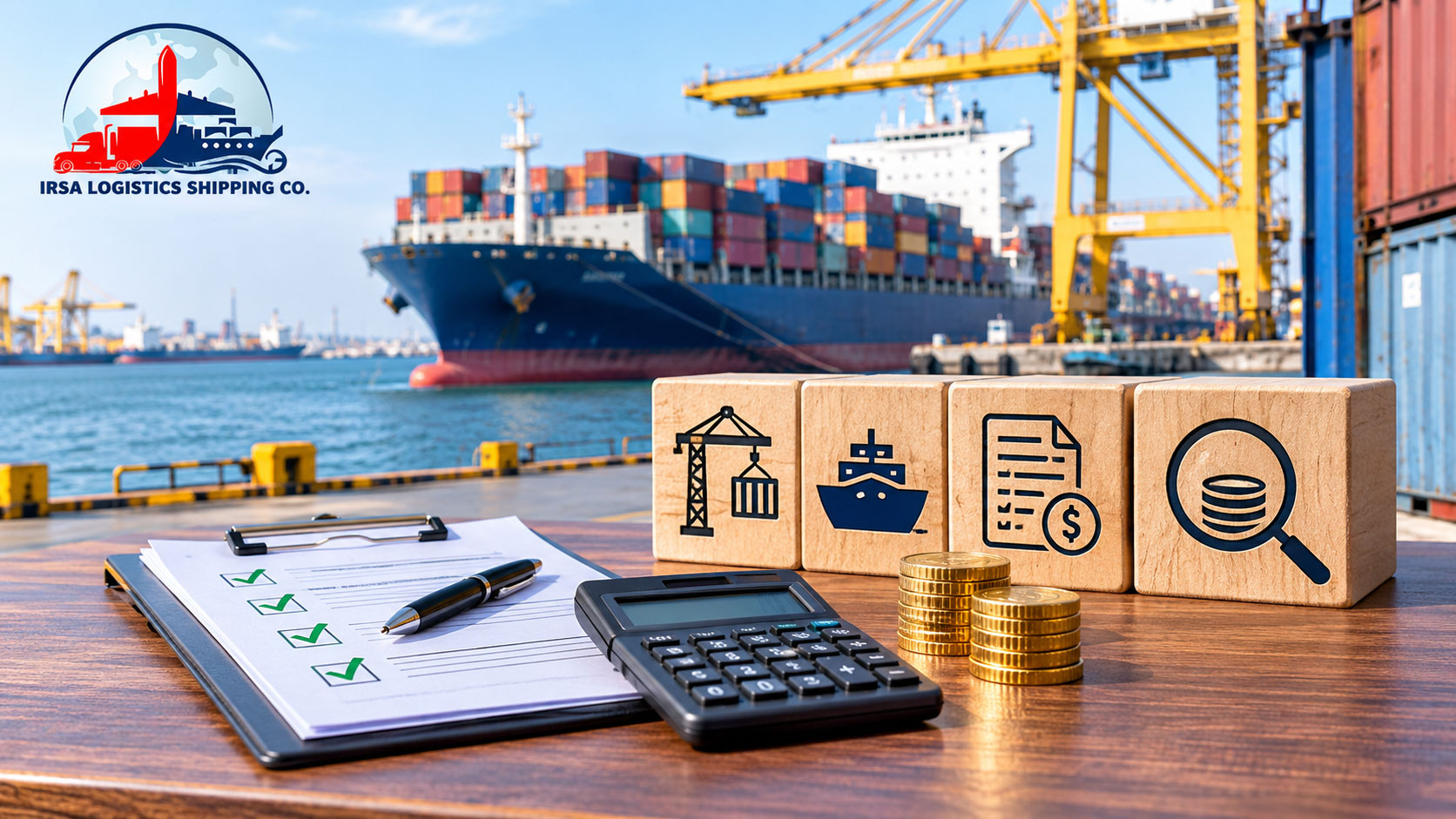
Create a cost sheet with a row for each item, recording the amount, currency, party responsible and whether the charge is included in the base rate:
- Main ocean freight
- Origin terminal and documentation services
- VGM weighing and container-specific services
- Route and seasonal surcharges
- Destination terminal and agency charges
- Customs duties, permits, taxes and clearance services
- Possible storage, demurrage and detention
- Inland delivery and waiting-time costs
- Insurance, payment fees and currency conversion
Frequently asked questions
Is THC always charged separately from ocean freight?
No. Depending on the carrier, port, contract and rate structure, it may be included in the quoted price or billed separately. The quotation should state which treatment applies.
What is the difference between demurrage and detention?
In common carrier usage, demurrage relates to keeping the carrier’s container in the terminal beyond free time, while detention relates to keeping it outside the terminal beyond the allowed period. Check the specific carrier tariff for the route.
Are customs duties part of sea freight?
No. Import duties, taxes, permits and clearance services are import costs. They should still be included when calculating the total landed cost.
What extra costs can arise with LCL shipments?
Receiving and delivery at the container freight station, deconsolidation, documentation, minimum service charges and storage may be added to the freight rate calculated by weight or volume.
How can importers avoid unexpected charges?
Obtain an itemised quotation, local tariffs, free-time terms, special-service costs and exclusions in writing before booking. Coordinate customs clearance and delivery before the vessel arrives.
Conclusion
The real cost of sea freight is more than the vessel’s base rate. Terminal services, documentation, weighing, route surcharges, destination charges, demurrage and detention, customs, inland transport, insurance and payment costs can all affect the final landed cost. The best way to control them is to request a detailed quotation, review the origin and destination tariffs, understand the contract and plan clearance and container return before arrival.
To discuss the route, equipment and services suited to your shipment, explore IRSA Darya Logistics international transport services.