What Is CMR and What Is Its Role in Road Transportation?
What Is CMR and What Is Its Role in Road Transportation?
International road freight transportation is one of the most important methods of moving goods between countries. In this type of transport, having valid shipping documents plays a vital role in protecting the rights of the shipper, consignee, and transportation company. One of the most important of these documents is the CMR. Many companies and exporters ask, What is CMR, and what role does it play in road transportation? Understanding this document can help prevent many legal disputes and transportation issues during the shipment of goods.
What Is CMR?
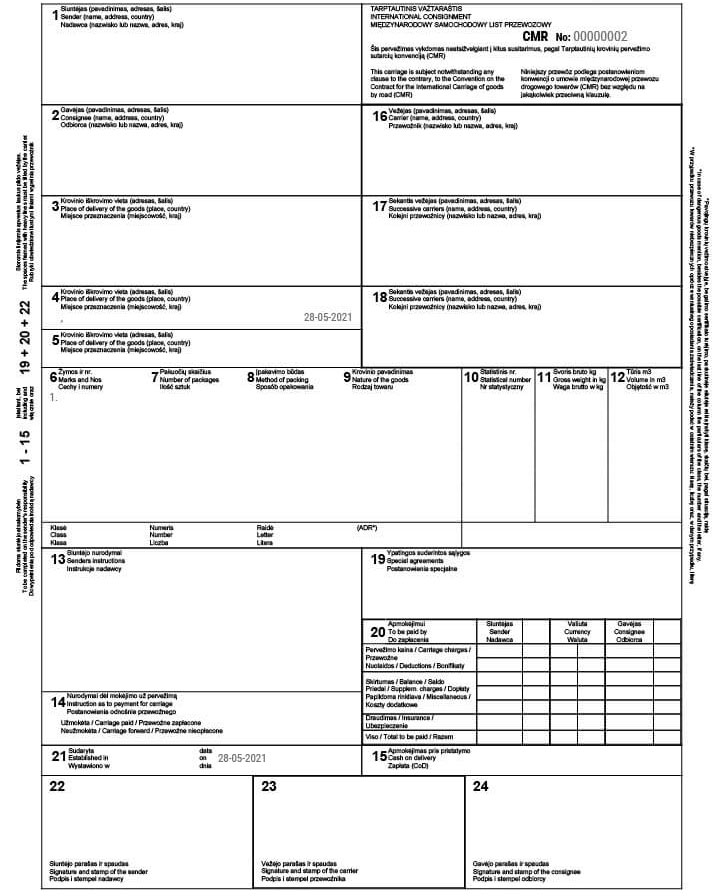
To explain what CMR is in simple terms, CMR is an international road consignment note issued under the Convention on the Contract for the International Carriage of Goods by Road. This document contains complete information about the shipper, consignee, transportation company, cargo details, weight, number of packages, destination, and shipping conditions.
In fact, a CMR serves as a transport contract that confirms the carrier has received the goods and is committed to delivering them to the destination according to the agreed terms.
History of the CMR Convention
The CMR Convention was established in 1956 in Geneva by the United Nations Economic Commission for Europe (UNECE). Its primary objective was to create uniform regulations for international road transportation among member countries. Today, many European and Asian countries are members of this convention, and international transport companies comply with its regulations.
What Does CMR Stand For?
The abbreviation CMR comes from the French phrase Convention relative au contrat de transport international de marchandises par route, which translates to “Convention on the Contract for the International Carriage of Goods by Road.”
Information Included in a CMR Consignment Note
Now that you know what CMR is, it is also important to understand the information recorded in this document.
- Name and address of the shipper
- Name and address of the consignee
- Transportation company details
- Loading location
- Final destination of the goods
- Detailed description of the cargo
- Gross weight
- Number of packages
- Type of packaging
- Freight charges
- Customs instructions
- Loading and delivery dates
- Signatures and stamps of the parties involved
The Role of CMR in Road Transportation
The primary purpose of the CMR document is to ensure transparency throughout the international transportation process. Besides recording shipment details, it also defines the responsibilities of each party involved.
The main functions of a CMR include:
- Proof that the goods have been handed over to the carrier
- Determining the carrier’s liability in case of damage or loss
- Facilitating customs clearance procedures
- Recording accurate shipment details
- Preventing disputes between the shipper and the consignee
- Providing legal evidence in commercial disputes
- Making shipment tracking easier
Who Uses a CMR?
Various individuals and organizations involved in international road freight transportation use the CMR document.
- International transportation companies
- Exporters
- Importers
- Truck drivers
- Customs authorities
- Insurance companies
- Freight forwarders
Advantages of Using a CMR
Using a CMR consignment note offers numerous benefits for cargo owners and transportation companies.
- Greater legal protection
- Standardized transportation documentation
- Reduced commercial disputes
- Faster customs clearance
- International recognition
- Simplified insurance claims
- Legal validity in courts and arbitration
Carrier Responsibility Under the CMR Convention
One of the most important aspects of the CMR Convention is the carrier’s liability. From the moment the goods are received until they are delivered to the consignee, the carrier is responsible for safeguarding the cargo. If the shipment is damaged, lost, or subject to unreasonable delay during transit, the carrier is generally liable for compensation unless it can prove that the incident occurred due to circumstances beyond its control.
Difference Between CMR and a Domestic Waybill
| Feature | CMR | Domestic Waybill |
|---|---|---|
| Type of Transport | International | Domestic |
| Legal Basis | Governed by the CMR Convention | Governed by national regulations |
| Application | International road transportation | Domestic road transportation |
| International Recognition | Yes | No |
Difference Between CMR and Bill of Lading
Many people assume that a CMR is the same as a Bill of Lading, but these are two different documents. A CMR is specifically designed for international road transportation, whereas a Bill of Lading is issued for maritime transport. Furthermore, each document is governed by different international regulations.
Is a CMR a Document of Title?
No. Unlike certain Bills of Lading, a CMR is not a document of title. It only serves as evidence of the transportation contract and confirms that the carrier has received the goods. It does not transfer ownership of the cargo.
Important Tips for Completing a CMR
- The shipper’s and consignee’s information must be completely accurate.
- The cargo description should match the customs documentation.
- The weight and number of packages must be recorded correctly.
- If dangerous goods are transported, their classification must be specified.
- The document should include the signatures and official stamps of the parties.
- The container or trailer seal number should be recorded whenever applicable.
Conclusion
Now that you understand what CMR is, you can better appreciate its importance in international road freight transportation. A CMR is one of the most important documents used in road transport because it not only records complete shipment details but also defines the legal responsibilities of all parties involved. Proper use of this consignment note increases transparency, reduces disputes, speeds up customs procedures, and enhances cargo security. Therefore, every company involved in international transportation should have a thorough understanding of the regulations and proper completion of this document.
Frequently Asked Questions
What is CMR?
CMR is an international road consignment note issued under the Convention on the Contract for the International Carriage of Goods by Road.
What type of transportation uses CMR?
The CMR document is used exclusively for international road freight transportation.
Who issues a CMR?
The CMR consignment note is issued by an international transportation company or a freight forwarder.
Is a CMR a document of title?
No. A CMR is only evidence of the transportation contract and confirmation that the carrier has received the goods. It does not transfer ownership of the cargo.