The Most Important Logistics Technologies in 2026
The Most Important Logistics Technologies in 2026
Introduction
The logistics industry has been evolving at an unprecedented pace in recent years. The growth of e-commerce, increasing global trade volumes, rising customer expectations for faster deliveries, and the need to reduce costs have driven companies toward the widespread adoption of Logistics Technologies. Today, supply chain management and transportation are no longer limited to traditional methods. Instead, innovative technologies play a critical role in improving efficiency, reducing costs, and enhancing customer experience.
In 2026, many of the world’s leading companies have made significant investments in the development and implementation of Logistics Technologies. These technologies not only increase operational speed but also enable more accurate decision-making and smarter resource management.
In this article, we explore the most important Logistics Technologies in 2026 and examine how each of them is transforming the future of transportation and supply chain management.
Why Are Logistics Technologies Important?
Increasing competition in global markets has encouraged companies to seek solutions that improve performance. The use of Logistics Technologies helps organizations manage operations more quickly, accurately, and cost-effectively.
Some of the primary benefits of Logistics Technologies include:
- Reducing operational costs
- Increasing delivery speed
- Improving inventory management
- Reducing human errors
- Enhancing customer satisfaction
- Optimizing the supply chain
- Increasing information transparency
For this reason, adopting modern technologies has become a necessity for companies operating in the logistics sector.
Artificial Intelligence: The Most Important Logistics Technology of 2026
Without a doubt, artificial intelligence is one of the most influential Logistics Technologies in 2026.
Artificial intelligence can analyze massive volumes of data in a short period of time and recommend the best decisions for operational management.
Applications of AI in logistics include:
- Demand forecasting
- Inventory management
- Transportation route optimization
- Predicting potential delays
- Reducing operational costs
- Analyzing customer behavior
Many international companies are already using artificial intelligence to improve their supply chain management.
Internet of Things and Smart Equipment Connectivity
Another of the most important Logistics Technologies in 2026 is the Internet of Things (IoT).
This technology enables communication between vehicles, warehouses, containers, and various types of equipment.
Smart sensors can transmit real-time information such as:
- Geographical location
- Temperature
- Humidity
- Cargo status
- Travel speed
This information helps managers accurately monitor shipments and prevent potential problems before they occur.
Autonomous Vehicles
Autonomous vehicles are among the technologies expected to revolutionize the transportation industry.
In 2026, many companies have conducted extensive testing of self-driving trucks.
The benefits of this technology include:
- Lower labor costs
- Reduced driving errors
- Improved safety
- Higher fleet productivity
- Shorter transportation times
Although widespread adoption still faces legal and infrastructure challenges, experts believe autonomous vehicles will soon become a major part of Logistics Technologies.
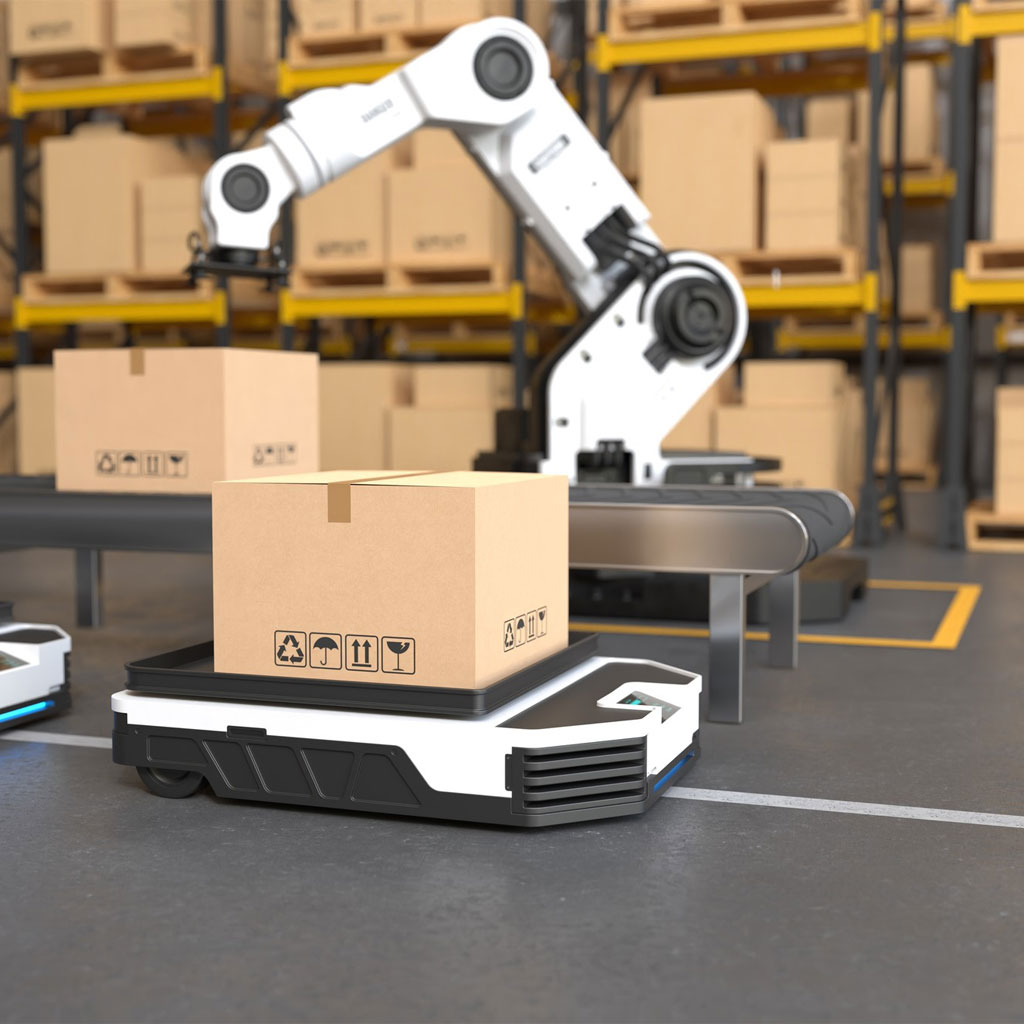
Smart Robots in Warehouses
Today, modern warehouses rely on robots more than ever before.
Smart robots can:
- Move goods
- Sort orders
- Perform packaging operations
- Manage inventory
The use of this technology increases order processing speed and reduces human error.
As a result, robotics is considered one of the most widely used Logistics Technologies in 2026.
Blockchain and Greater Supply Chain Transparency
Blockchain is another technology that has attracted significant attention in recent years.
This technology enables secure and immutable data recording.
The benefits of blockchain in logistics include:
- Greater transparency
- Reduced fraud
- Improved data security
- Faster information exchange
- Fewer commercial disputes
Many companies use blockchain for transportation document management and cargo tracking.

Big Data and Advanced Information Analysis
Big Data is one of the most important Logistics Technologies for intelligent decision-making.
Companies collect enormous amounts of information from various sources every day.
Analyzing this data can help with:
- Identifying supply chain weaknesses
- Forecasting demand
- Improving fleet performance
- Reducing costs
- Increasing productivity
Using analytical data allows managers to make more accurate decisions.
Cargo Delivery Drones
Drones are rapidly becoming one of the most exciting Logistics Technologies.
This technology is particularly useful for fast deliveries in urban and remote areas.
The benefits of drones include:
- Faster deliveries
- Lower transportation costs
- Access to hard-to-reach areas
- Reduced road traffic congestion
Although legal restrictions still limit widespread use, drones are expected to play a more significant role in logistics in the coming years.
Transportation Management Systems
Transportation Management Systems (TMS) are among the most important Logistics Technologies for transportation companies.
These systems help organizations:
- Select the best routes
- Control costs
- Evaluate fleet performance
- Optimize transportation schedules
As a result, transportation efficiency improves significantly.
Digitalization of Transportation Documents
One of the major trends in 2026 is the gradual elimination of paper-based documentation.
Digital documents offer numerous benefits:
- Lower administrative costs
- Faster processing times
- Reduced human errors
- Improved information security
- Easier document access
For this reason, many countries and international companies are moving toward the complete digitalization of trade documents.
Smart Warehouses
Smart warehouses are among the most advanced Logistics Technologies available today.
These warehouses utilize:
- Artificial Intelligence
- Robotics
- Internet of Things
- Data analytics
to automate warehouse operations.
The use of smart warehouses increases order preparation speed and reduces operational expenses.
Green Transportation
Environmental concerns have become increasingly important in 2026.
As a result, new Logistics Technologies are focused on reducing energy consumption and carbon emissions.
Examples of these technologies include:
- Electric trucks
- Clean fuels
- Route optimization
- Smart energy management
This approach not only protects the environment but also lowers operational costs.
Challenges of Implementing Logistics Technologies
Although Logistics Technologies offer many benefits, their implementation also presents challenges.
Some of the most important challenges include:
- High initial investment costs
- The need for employee training
- Cybersecurity threats
- Infrastructure requirements
- Implementation complexity
However, many companies believe that the long-term benefits of these technologies far outweigh the initial costs.
Frequently Asked Questions
What are the most important Logistics Technologies in 2026?
Artificial intelligence, the Internet of Things, blockchain, robotics, Big Data, drones, and autonomous vehicles are among the most important Logistics Technologies in 2026.
Why are Logistics Technologies important?
They help reduce costs, increase operational speed, improve supply chain management, and enhance customer satisfaction.
Will artificial intelligence change the future of logistics?
Yes. Artificial intelligence is one of the most influential Logistics Technologies and plays a vital role in operational optimization and intelligent decision-making.
Conclusion
In 2026, Logistics Technologies are transforming the transportation and transportation supply chain industry more than ever before. Artificial intelligence, the Internet of Things, blockchain, Big Data, robotics, and autonomous vehicles are just some of the innovations shaping the future of this sector.
Companies that adopt these technologies can reduce costs, improve service speed, and increase customer satisfaction. Therefore, investing in Logistics Technologies is no longer simply a competitive advantage; it has become a necessity for success in global markets.