
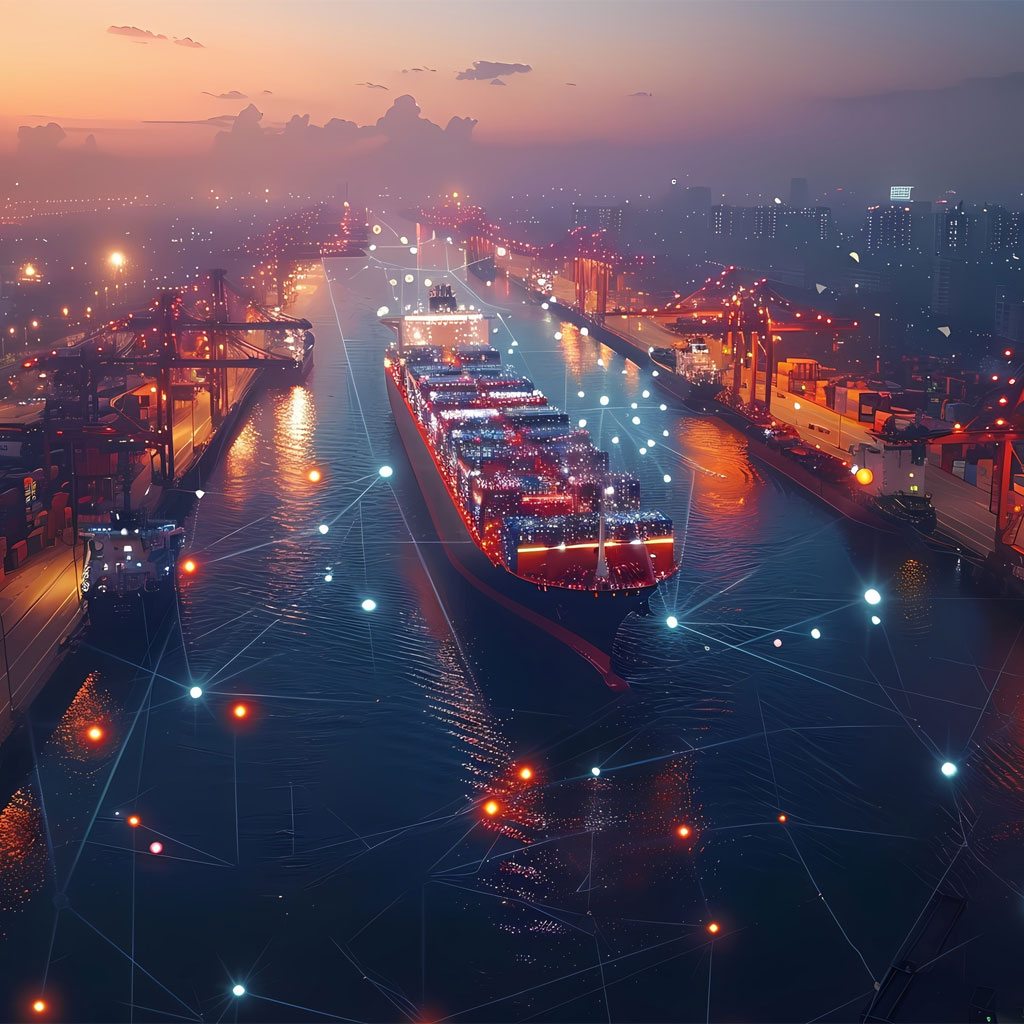

The Role of Artificial Intelligence in Predicting Maritime Traffic
The maritime transportation industry is one of the most essential foundations of global trade. Billions of tons of goods are transported by sea each year, and thousands of vessels are constantly moving across various routes. Under such conditions, managing maritime traffic becomes extremely important. One of the technologies that has created a major revolution in this field in recent years is artificial intelligence. Using artificial intelligence in predicting maritime traffic has significantly improved operational accuracy, route safety, and the speed of decision making. In this article, we will analyze the role of artificial intelligence in predicting maritime traffic in a comprehensive and specialized manner.
Chapter One: The Importance of Maritime Traffic in Global Trade
Maritime traffic plays a fundamental role in the global trade network. Sea routes act as vital arteries that enable the transportation of essential goods, food products, energy resources, and industrial items. Any disruption in these routes, whether caused by weather conditions or by increasing vessel congestion, can lead to delays in the supply chain.
With the rapid growth of global trade, maritime traffic has become more complex and more congested. This has made traditional traffic management methods insufficient for modern maritime industries, pushing the world toward adopting new technologies such as artificial intelligence.
Proper management of maritime traffic leads to three major outcomes:
- Increased safety along sea routes
- Reduced operational costs
- Shorter delivery times and improved customer satisfaction
To achieve these goals, AI has become a reliable and advanced tool.
Chapter Two: Why Artificial Intelligence Is Important in the Maritime Industry?
Artificial intelligence has gained a special place in the maritime transportation industry due to its ability to learn, analyze massive datasets, and provide accurate predictions. AI-based systems can process data such as wind speed, wave height, vessel routes, ocean currents, port conditions, satellite data, and real-time traffic information to deliver highly precise analyses.
The key reasons artificial intelligence is important in maritime traffic management include:
- The ability to analyze large datasets at high speed
- Reduction of human error
- Accurate prediction of vessel behavior and environmental conditions
- Helping reduce fuel consumption and navigation costs
- Improving routing accuracy and port entry and exit management
Using AI not only increases operational precision but also reduces decision making time, which is extremely valuable for fleet managers.
Chapter Three: How Artificial Intelligence Predicts Maritime Traffic
Predicting maritime traffic is a complex process that requires analyzing millions of different data points. AI, with its high computational power, can process this enormous volume of data from multiple sources. Some of the most important data used by AI systems for predicting maritime traffic include:
- Weather information and atmospheric conditions
- Satellite data on vessel movements
- AIS information including vessel position and speed
- Historical data regarding routes and traffic patterns
- Information about water currents, waves, and ocean depth
Through machine learning models and neural networks, artificial intelligence analyzes this data with very high accuracy and presents the results to ship operators in the form of smart maps, traffic alerts, and route recommendations.
Chapter Four: Using Artificial Intelligence to Reduce Congestion in Sea Routes
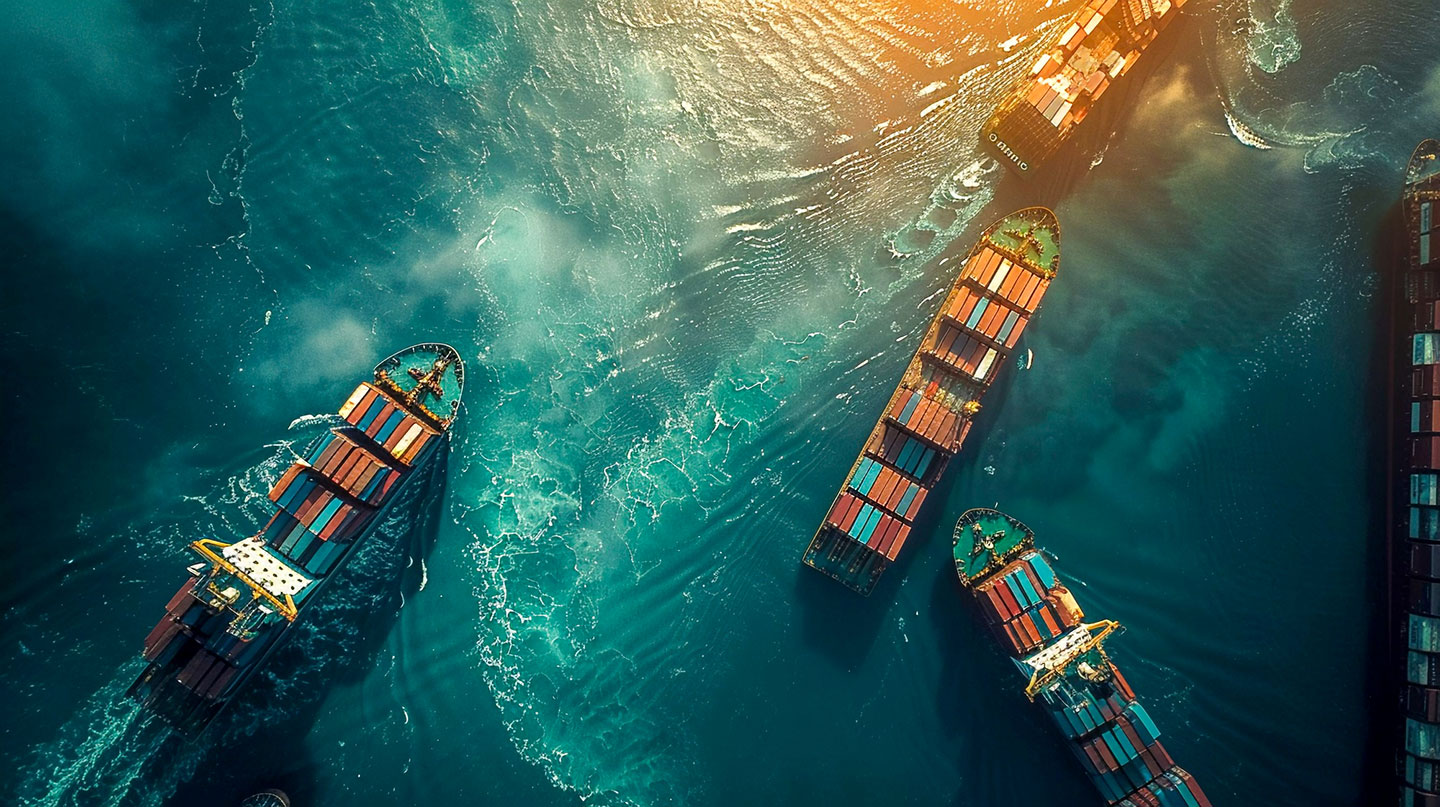
One of the major challenges in global trade is congestion in high-traffic routes. Some major waterways such as the Suez Canal and the Strait of Malacca constantly experience heavy vessel density. Congestion in these routes increases entry and exit times for ships and leads to delivery delays.
AI, by analyzing real-time traffic and providing accurate predictions, can identify high-density zones and suggest alternative routes or optimized scheduling for passing through busy regions. This significantly reduces congestion and improves cargo movement speeds.
Chapter Five: The Role of Artificial Intelligence in Predicting Dangerous Weather Conditions
Unpredictable weather is one of the biggest risk factors in maritime transportation. Storms, high waves, strong winds, and sudden changes in sea conditions can cause route deviations and even severe damage.
AI-based systems can analyze meteorological data and atmospheric patterns to predict hazardous conditions before they occur. This allows ships to:
- Change their route
- Avoid storm zones
- Reduce fuel consumption
- Increase crew and cargo safety
As a result, artificial intelligence plays a major role in enhancing the safety of maritime journeys.
Chapter Six: The Role of Artificial Intelligence in Managing Ports and Vessel Traffic Flow
The entry and exit of vessels at ports is one of the most sensitive phases of maritime transportation. Delays in docking or departure can disrupt the entire supply chain schedule. AI has provided significant support to ports in this area.
Smart systems can:
- Predict the exact arrival time of ships
- Determine the optimal docking location
- Reduce congestion at terminals
- Optimize container management
- Minimize vessel waiting time
With artificial intelligence, ports can offer faster and more accurate services.
Chapter Seven: The Role of Artificial Intelligence in Reducing Fuel Consumption and Operational Costs
Fuel consumption is one of the largest expenses for commercial vessels. Artificial intelligence can analyze factors such as wind speed, ocean currents, cargo weight, and traffic conditions to recommend optimized routes.
Using AI results in:
- Reduced fuel consumption
- Lower navigation costs
- Decreased emission of harmful gases
- Faster delivery times
For shipping companies that spend millions of dollars on fuel daily, this is extremely valuable.
Chapter Eight: The Role of Artificial Intelligence in Predicting Maritime Accidents
One of the most important applications of artificial intelligence is predicting vessel collisions with other ships or natural obstacles. Smart systems analyze real-time data, predict vessel trajectories, and issue necessary warnings.
This directly increases maritime safety and prevents financial and human losses.
Chapter Nine: The Impact of Artificial Intelligence on the Future of Maritime Transportation
Artificial intelligence has revolutionized the future of maritime transportation. From autonomous ships to smart port management systems, this technology has improved speed, accuracy, and cost efficiency. In the coming years, the use of artificial intelligence will expand across all sectors of the maritime industry.
Artificial intelligence not only enhances the accuracy of traffic prediction but also plays a major role in risk reduction, safety improvement, and operational optimization.
Conclusion
The role of artificial intelligence in predicting maritime traffic is becoming more crucial day by day. This advanced technology has transformed route management, complex data analysis, weather forecasting, and operational cost reduction. With the steady growth of global trade, AI-based systems have become an essential need for shipping companies and fleet managers. The future of the maritime industry will heavily depend on the development and wide adoption of artificial intelligence.


